
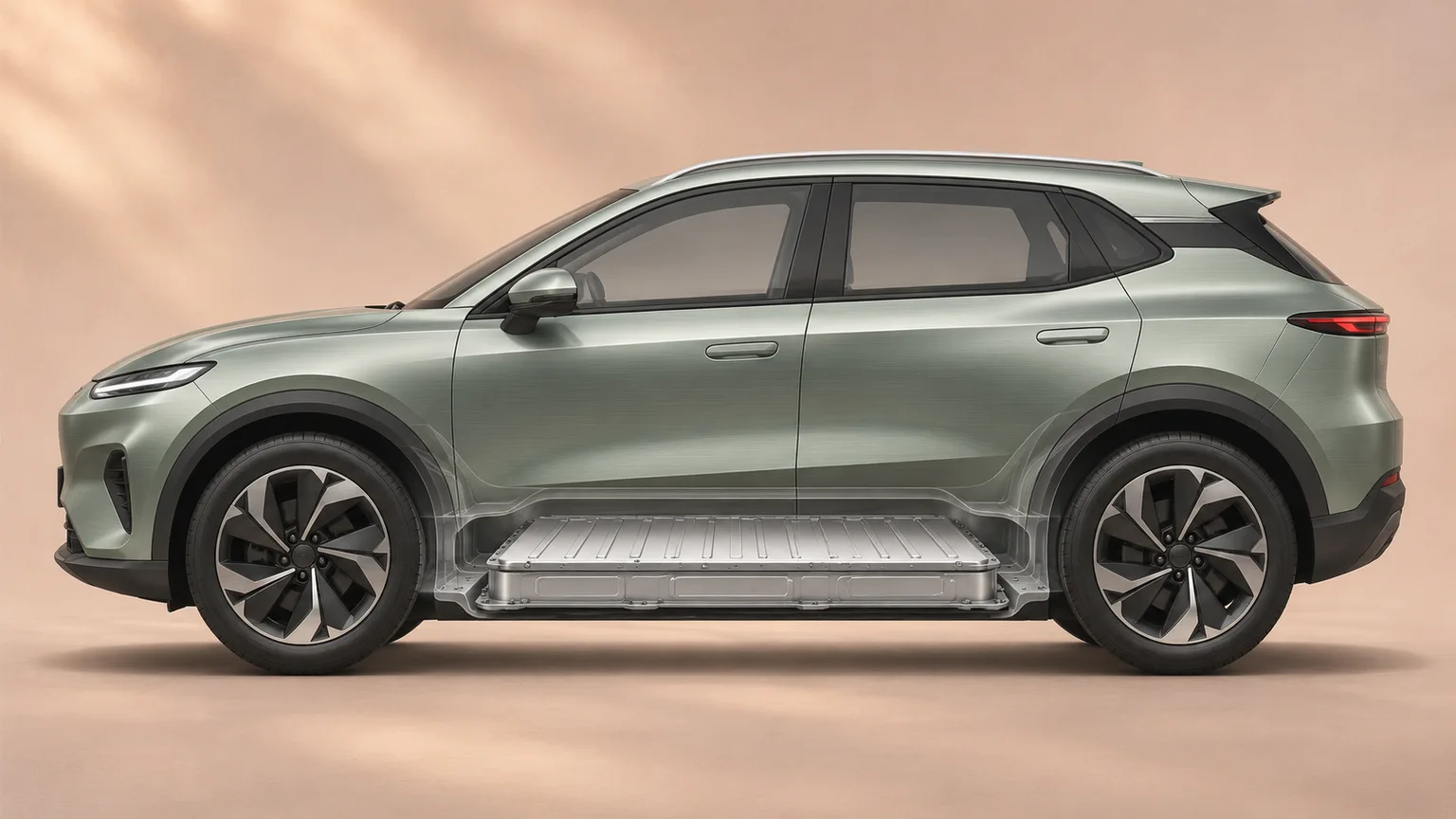
Start with the car, then check the capacity
To verify the factory battery capacity of a Chinese EV, match the full VIN to the car and its paperwork. Ask for the original sales market, model year and exact trim, then find the battery capacity in the manufacturer’s specifications for that version. For a mainland China-market car, get the manufacturer’s vehicle model code (车辆型号) from the nameplate or vehicle documents if available. If more than one configuration still fits, ask the manufacturer or dealer for a record tied to that VIN.
Do this before paying for a long-range version. A listing can use one model name for several battery options. The VIN lets you tie the evidence to the individual car. A brochure tells you what the manufacturer offered, and a VIN-specific configuration record can help establish which configuration was supplied. Save the record with the purchase paperwork so you can check the same car at handover.
Car listings sometimes use the date of first registration as the year in the headline. On a privately imported car that date may also come from a different country than the original sale. When the dates are close to a change in specifications, ask for the build date and the version on the dealer’s record. A brochure dated after the vehicle was built can help you understand a model family, but check for the edition that covers the car you are buying.
Compare the same battery measurement
Battery capacity in kWh measures energy. Motor output or charging power in kW describes power, which is the rate at which energy is delivered or transferred. A brochure can show figures for all three. When copying the battery figure, record the column heading and unit with it. If an advert gives a bare number, ask the seller to show where it came from.
Some specifications give total pack energy. Others give usable energy, the amount available within the vehicle’s operating limits. Both figures can describe the same pack. If two documents disagree, first see whether both label the figure the same way. If a source simply says “battery capacity” without defining it, keep that wording in your notes and ask the dealer which measure it represents.
Range in kilometres or miles is a separate figure. A range rating is tied to a test procedure and the configuration tested. The range shown on a used car’s display can also change with driving conditions. Use a manufacturer’s capacity figure in kWh to compare pack sizes. Keep any advertised range next to its test cycle so it remains clear what the seller is quoting.
A full charge readout or a recent charging receipt cannot substitute for these figures. The display’s percentage is relative to a charge window, and the receipt records energy delivered during that session, often from a partial charge. Use those records to understand a particular trip or charging session. For the purchase comparison, ask for a document that explicitly names the battery specification.
BYD ATTO 3 capacity by configuration
One BYD export specification sheet lists 49.92 kWh for the Standard Range ATTO 3 and 60.48 kWh for the Extended Range. The same sheet lists a 150 kW motor and a 2,720 mm wheelbase for both. A listing that gives the motor power or wheelbase therefore still leaves both battery sizes possible under that sheet. In this case the capacity row is the useful one.
Treat those numbers as an example from that particular specification sheet. Before applying them to an advertised car, ask which market the car was originally sold in and get the brochure or specification sheet for that market and model year. A regional trim name may be unfamiliar on an imported car. Record the trim exactly as written on the original documents and look for it in the matching market’s specifications.
Suppose a seller describes an ATTO 3 as Extended Range and shows a brochure listing 60.48 kWh. That establishes the specification for the version in the brochure. Ask for the original order, delivery paperwork or a dealer configuration record with the VIN and the version. If the record gives the version without a kWh figure, match it back to the right brochure. If the record describes another version, resolve the discrepancy before valuing the car as the longer-range option.
BYD’s 2025 European ATTO 3 sheet illustrates the value of checking the market. It lists 49.9 kWh for Business and 60.4 kWh for Comfort and Design. Keep those labels and figures together when comparing paperwork. A number from the export sheet above does not establish the specification of a European car, even when the model name and motor power match.
Read the battery field in a VIN report
In a ChinaCarCheck Basic VIN result, look under Powertrain for Battery capacity when the source supplies it. Write down the capacity and the vehicle details associated with it, including the vehicle model code or trim if shown. When a result has several candidate trims, keep those candidates in view as you compare the report with the nameplate and the manufacturer’s information.
A matching figure is a useful cross-check once the market, model year and version line up. If two versions remain possible, ask for the VIN-specific configuration record. If the capacity field is blank, check the manufacturer’s specifications with the exact version instead of filling in a number from another car in the same series. If the report and seller disagree, compare the VIN transcription and the measurement labels before deciding which information needs further confirmation.
Chinese-market vehicle model codes and official records
For a car originally sold in mainland China, ask for a clear photo of the manufacturer’s plate or original vehicle paperwork showing the vehicle model code (车辆型号). Copy the whole code, including its final letters and digits. The code identifies a vehicle model in official records. Keep the full VIN separately to tie your notes and any dealer response to the individual car.
Search for the code in the Ministry of Industry and Information Technology’s road vehicle product information system. Check the manufacturer and the full code on the result before reading the details. If the parameter sheet lists battery type or manufacturer without an energy figure, use it for those fields. Other official model listings may show a column labelled 动力蓄电池组总能量, meaning total traction battery energy in kWh. Check the document’s date and that the row matches the code on the car.
A published model entry describes a configuration or the options listed for that model. If the entry shows several options, or if you cannot find an energy figure, take the model code and VIN to the manufacturer or dealer. Ask which battery specification applies to that VIN and request a copy of the record they used. For an export-market car, start with the manufacturer’s documents for its original sales market.
For a worked example of the official field, a historical Chinese vehicle catalogue lists the BYD e6 under code QCJ7006BEVF and gives 63 kWh in its total battery energy column. You can find the row by searching the PDF for the code. Use that figure only for the listed configuration. A search for the sales name alone would leave you guessing which entry applies to a particular car.
Battery replacements and current condition
A factory specification tells you what was supplied when the car was new. If the battery has been replaced, ask to see the dated invoice or service record. Check that the record names the car by VIN and identifies the installed pack or its part number. Ask the dealer or an EV-qualified workshop to confirm what was fitted if the invoice describes only a generic battery repair.
For a used EV, ask for a battery condition report tied to the VIN and the test date. Look for what the test actually measured, such as estimated state of health (SoH) or measured usable energy, and the reference the result is compared with. A dashboard charge percentage describes the current charge level. The factory kWh figure and the advertised range belong in the specification check, while a condition report addresses the battery’s present performance.
If the seller sends a report that only says “battery OK,” ask for the reading, the method used and when the test was performed. If your decision depends on present usable energy, ask whether the workshop can measure it and provide the result in writing. Keep the factory match, the replacement record if any and the condition report together so each claim can be checked against the right document.
If you are comparing two condition reports on the same car, look first at the date, test method and reference value. A percentage reported by the car and a measured energy result may answer related questions using different methods. Ask the shop to explain the difference before treating a gap as evidence that the pack has deteriorated between the two tests.
Evidence to collect before paying
Save the VIN from the actual car, the original market and version, the model code if available, and a copy of the relevant manufacturer specification. Keep the exact kWh figure and how it is labelled. Ask the seller to put the agreed version in the sales paperwork when the battery size affects the price.
If the documents support the advertised version, check the VIN again at handover. If the documentation leaves two battery options open, price the car on the configuration you can substantiate or wait for the dealer’s confirmation. For a used car, decide whether the latest condition evidence is enough for your intended trips and charging needs before committing to the purchase.