
Start with the number on the car
If you are buying a Chinese car remotely, ask for two clear views before comparing prices or trims. One should show the VIN on the vehicle with enough surrounding detail to tell where it was photographed. The other should show the VIN field on the registration document or the paperwork for that vehicle, with unrelated personal information masked. Compare all 17 characters. A seller who sends only a typed number has given you something to search, but you still need to establish that it belongs to the car in the listing.
Keep the check tied to one vehicle. For example, if a dealer offers two silver cars from the same series, save each set of photos separately and use the last four VIN characters to label the two sets in your notes. Check the full number privately. The last four characters are useful for keeping your files organized, but a partial VIN is not enough to confirm a match.
Do the comparison again at handover. A result pulled during negotiations is useful only if the vehicle you receive carries the same VIN. This is particularly important when the listing relied on stock photos, the seller changed the car after a deposit, or the photos were sent in separate messages with no clear connection to the listing.
Common VIN locations and document labels
China’s current national standard for road vehicle identification numbers is GB 16735-2019. In Chinese documentation, look for 车辆识别代号 or the abbreviation VIN. Avoid confusing the VIN with 发动机号码, which refers to the engine number, or with the registration plate number. A vehicle model code can be useful later when checking manufacturer specifications, but it identifies a model rather than the individual car.
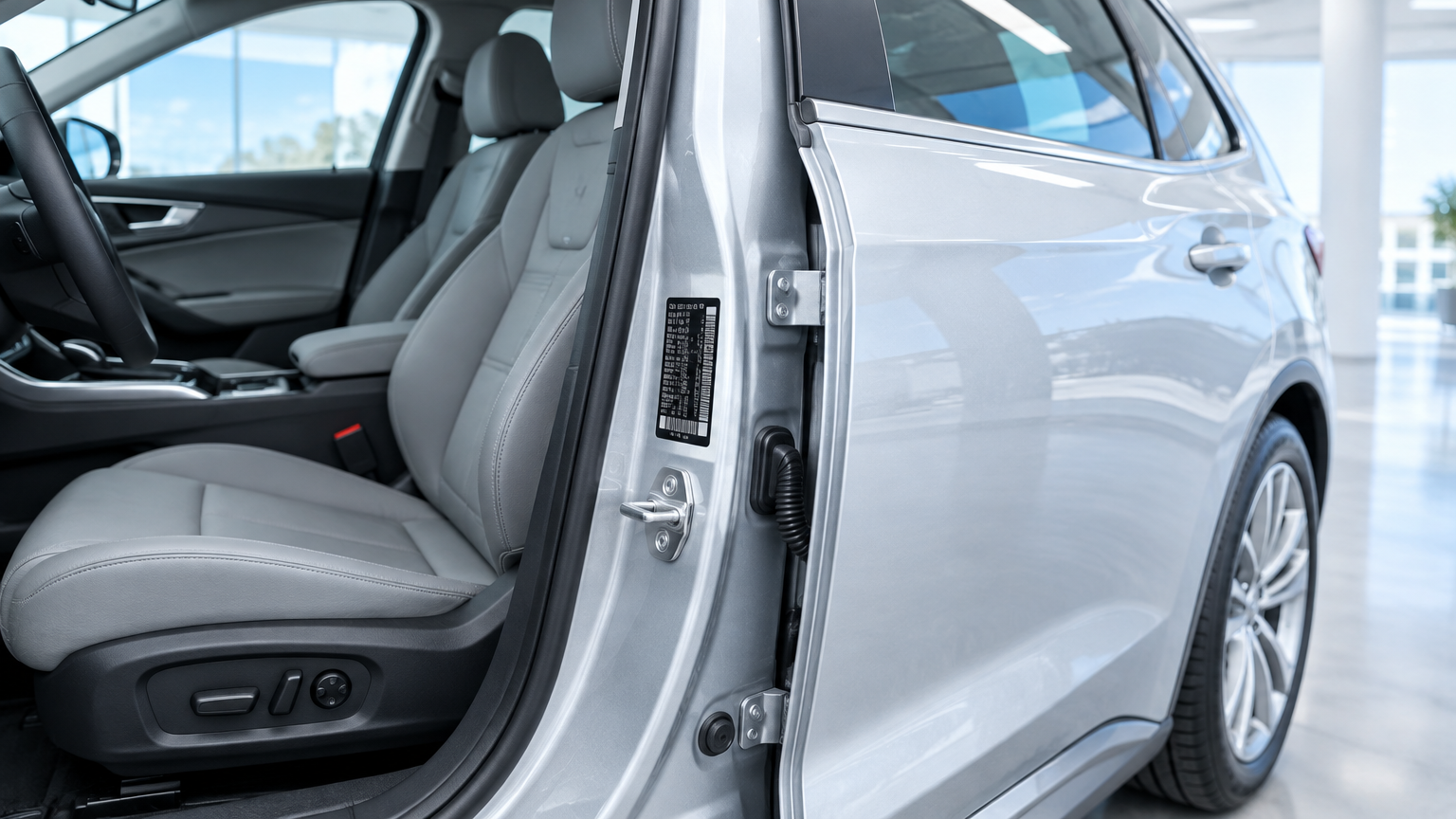
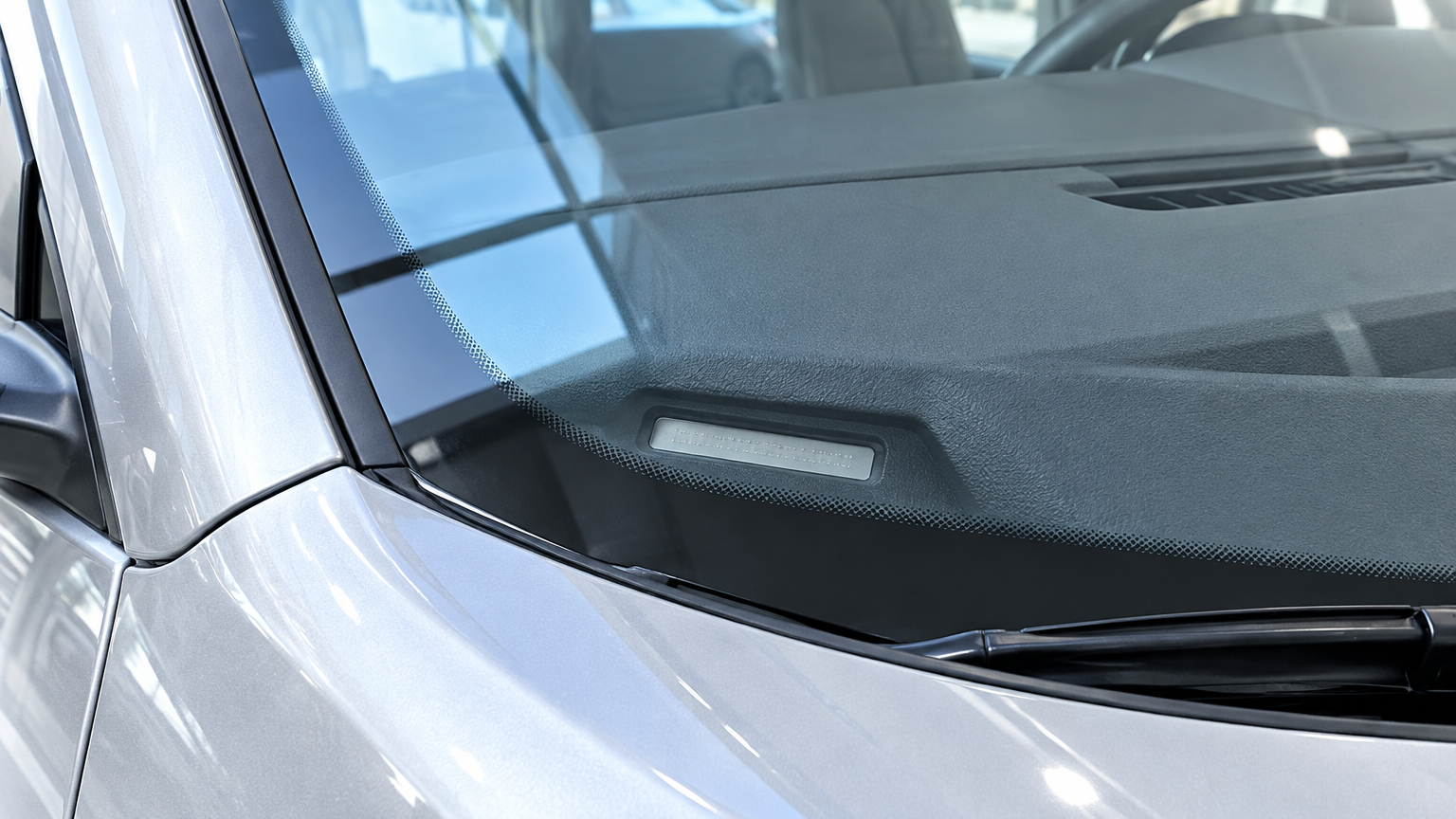
On the car, start with the lower windshield or dashboard plate visible from outside. If you cannot read it because of reflections, ask for a different angle in daylight. Then check the manufacturer label around a front door opening. The side and location vary between models. Tesla’s 2020–2024 Model Y service manual, for example, identifies a windshield location, a door-opening label and a location under the right front seat for Shanghai-built vehicles. Use the manual for the particular car rather than assuming every VIN is on the driver’s side. For a marking that requires access under trim, ask the owner or an inspection shop to show it safely.
A useful photo shows both the characters and the area around them. Instead of asking for a close crop alone, ask for a wide shot of the windshield or door opening and a second shot sharp enough to read the VIN. When a visual inspection is available, have the inspector compare the marking, manufacturer label and paperwork. If they disagree, pause the purchase and have the discrepancy explained with the original documents. A clean-looking lookup result does not resolve a mismatch on the car.
Copy all 17 characters before searching
Enter one continuous VIN. Normal VINs use letters and numbers and exclude I, O and Q. If a photo seems to contain one of those letters, check for a digit such as 1 or 0 in that position. Look back at the original marking or document rather than repeatedly guessing characters in the form. A missing or mistyped character can give no result or lead you to a different record. Capitalization is easy to normalize; an uncertain character requires better evidence.
Compare the number in small groups from left to right, then check it again starting at the end. This helps catch transposed characters, especially when you are copying from a phone screen. Keep punctuation that belongs to the surrounding document out of the field. If the vehicle has an unusual identifier that does not fit the standard form, raise that with the manufacturer or the registration authority for the vehicle rather than padding the number or borrowing one from a similar car.
A format check only tells you whether the text looks like a VIN. It does not establish where the car is, who owns it, or whether the seller can transfer it. Those questions require separate checks on the actual vehicle and documentation.
Read the lookup result against the listing
Start with the make, series and available model year. They should point to the same vehicle family described in the advert. If the lookup shows one series and the seller advertises another, check the VIN transcription first. If the number is correct, request the original vehicle documents and ask the seller to explain the difference. Translated sales names are not always identical to the labels used in vehicle data, so compare more than the English spelling before deciding the records conflict.
Then look at the details that matter for the purchase. ChinaCarCheck’s Basic result may show powertrain information, transmission, seating or dimensions when the data provider returns those fields. Compare the specific fields that would change your decision. For example, if you need a seven-seat vehicle, compare the returned seating count with the registration or manufacturer record and confirm the seating on the actual car. If the seating field is absent, carry it forward as an unanswered question.
Keep the model year, build date and first registration date separate. A used-car listing may use the registration year in its headline, while a lookup or manufacturer describes a model year. Ask which date a seller is quoting before treating a difference as proof of an error. Write down the type of date alongside the value. This makes it easier to compare like with like when you receive a document, a specification sheet and a sales listing that each use a different label.
Exact trim and equipment still need evidence
A result such as “Trim unconfirmed” means you can use the identified series as a starting point. A result with multiple candidates means more than one configuration could fit the data available. Neither state gives you a basis for assuming the car has the most expensive equipment in the list.
Suppose a listing advertises a long-range variant and includes a photo of a premium interior, while the lookup identifies the series without confirming the configuration. Ask for a manufacturer or dealer specification record tied to that VIN and check the details that justify the asking price. For a petrol or hybrid model, an engine model code, output or transmission may help distinguish candidates. For an EV, request the manufacturer’s configuration information for the claimed battery and drivetrain. Range figures in advertisements can also refer to different test procedures, so compare the equipment and specification details first.
China’s Ministry of Industry and Information Technology describes a public system for looking up approved road vehicle product specifications and downloading parameter pages. Where the seller can provide the Chinese vehicle model code, that source can help you compare approved model-level figures against the listing. It is a model reference. To verify optional equipment or the condition of a particular car, pair it with a record tied to the VIN and an inspection.
Unavailable data and conflicting results
Treat “no matching vehicle found” differently from a temporary lookup failure. A no-match result may reflect a transcription problem or limited coverage for that VIN. Review the number against the vehicle and the document. If both agree and the search still returns no record, seek evidence directly from the seller, manufacturer or dealer. The absence of a match does not establish that the vehicle is invalid.
If the lookup reports a likely match but a specific field is blank, ask a question about that field. For example, ask the seller to show the seating layout or provide the powertrain label, instead of repeating a broad request for a vehicle report. A missing field should remain open in your notes. If the service reports a temporary failure, try again later with the same confirmed VIN or proceed with the independent checks available to you.
Use a three-part record when comparing several cars: identity confirmed by matching documents and vehicle markings, specification claims supported by a dated source, and unresolved items that still affect the deal. An item such as a missing wheelbase figure may have little effect on some purchases. An unanswered claim about the battery variant, drive layout or the car’s title can change whether the deal makes sense.
Separate recall, history and condition checks
Run a recall check independently. China’s State Administration for Market Regulation provides a vehicle recall scope query that accepts a 17-character VIN. Read the relevant notice and contact the manufacturer or an authorized dealer if the VIN is included or the campaign status needs confirmation. Whether a VIN is listed in a recall and whether the required work has already been carried out are separate questions. Ask for evidence of completed recall work where relevant.
A Basic VIN result identifies available specifications. For accident damage, repairs, mileage, ownership or battery health, ask for the relevant documents and commission an inspection if those factors affect your decision. For example, a lookup can help identify the vehicle series, while a technician checks repair areas or tests battery condition. Record the outcome of each check against the same VIN. Keep full VIN and registration photos in the records for the transaction instead of posting them publicly.
Before paying, review the remaining gaps with the seller. Proceed on the facts you can tie to this specific car and write any important conditions into the purchasing arrangements. If the VIN on the car and the paperwork still disagree, the specification shown online is no substitute for resolving the discrepancy. If the identity matches but the exact trim remains uncertain, price the deal on the equipment you can verify.